Topic
Words,
Words,
words,
words.
Spoken and written. Novels, philosophy, and the words of the classroom.
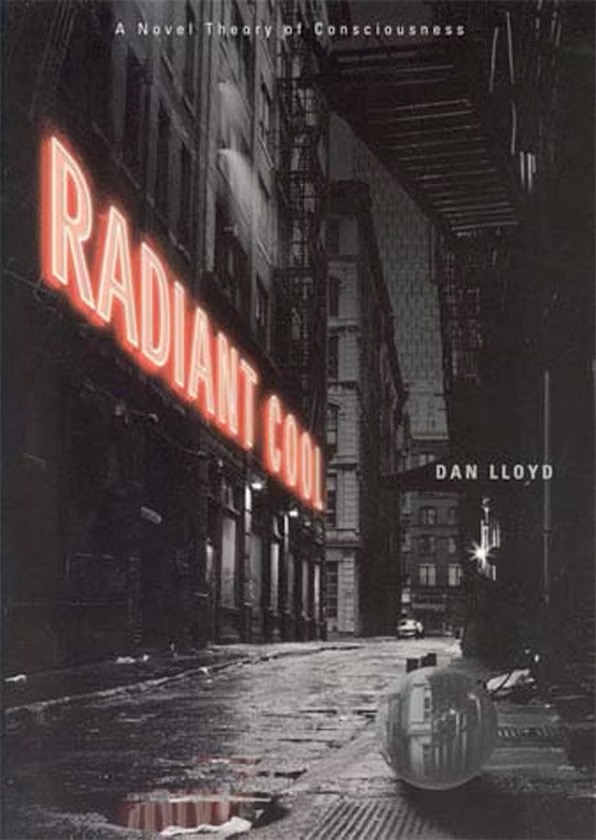
Radiant Cool: A Novel Theory of Consciousness (MIT Press 2004) is one nexus. The study of consciousness begins with first-person experience — phenomenology. Experience has a narrative flow; thus, a novel. Consciousness is a mystery; thus, a detective story, led by a sleuth who happens to be a graduate student in philosophy. It gets complicated, and so the book also includes a long non-fiction appendix hooking phenomenology to the brain. Topic, approach, and an urge to do something new led to Radiant Cool. MIT Press ↗
An earlier, more traditional book is Simple Minds (MIT Press 1989), which sought a theory of mental representation based in the idea that simpler brains offered a way in, and from them one could scale up toward a theory including meta-representation, consciousness, and narrative. (The narrated self returns in a recent paper as well.) MIT Press ↗
Over the course of my career, I've remained interested in time as it appears in human experience — work which lights up in its own topic.
The words that aren't realized here were those of the classroom. At the intersection of Mind × Music you'll find two lectures on that topic. Here and elsewhere I'll mention my Massive Open Online Course (MOOC): The Conscious Mind: A Philosophical Road Trip. The trailer is below. The course itself is archived at EdX — you can't do the exercises but the stream of mini-lectures and demos endures. (You may need a free EdX account to see it.)
The MOOC was the core of the first part of my course, "Minds and Brains," which I taught annually for, gosh, more than thirty years. It evolved hugely over time.